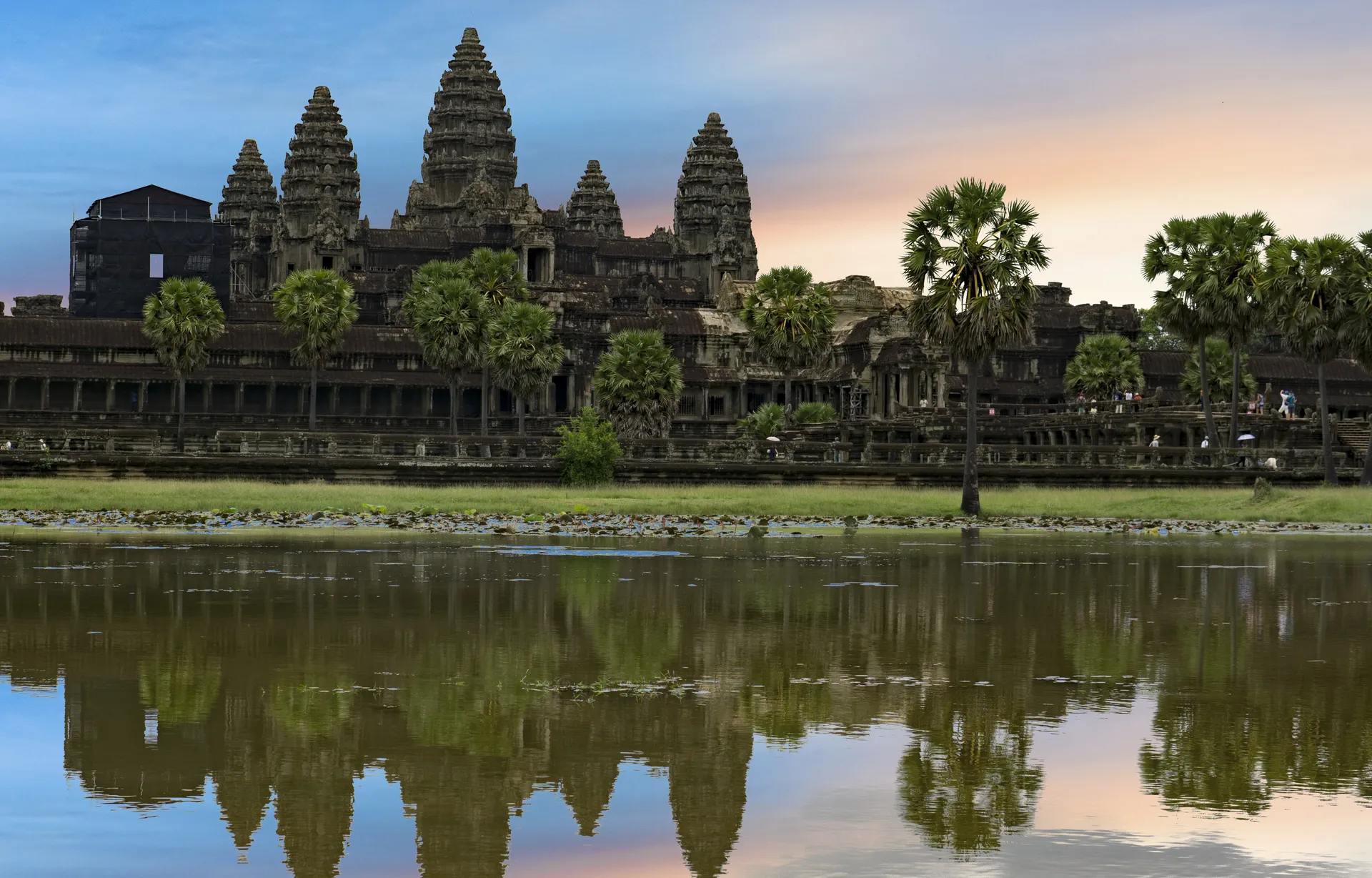
Siem Reap — whose name translates as "Siam Defeated," commemorating a seventeenth-century Khmer victory over Thai invaders — is the gateway to Angkor, the vast temple complex that was the heart of the Khmer Empire from the ninth to the fifteenth century. At its zenith, Angkor was the largest preindustrial city on earth, home to nearly a million people, and its hydraulic engineering — an intricate system of reservoirs, canals, and moats — supported a civilisation that built monuments to rival anything in ancient Rome or Greece.
Angkor Wat, the jewel of the complex, is the largest religious monument ever constructed — a five-towered mountain temple dedicated to Vishnu, its walls adorned with nearly two thousand square metres of bas-relief carvings depicting mythological scenes and historical battles. But the complex extends far beyond this single temple. The Bayon, at the centre of Angkor Thom, presents over two hundred serene stone faces gazing outward in every direction. Ta Prohm, left largely unrestored, is the temple where silk-cotton trees have wrapped their roots around sandstone doorways in a dramatic embrace of nature and architecture.
Siem Reap's culinary scene has blossomed in recent years. Fish amok — a fragrant curry of freshwater fish steamed in banana leaves with coconut milk, lemongrass, and slok ngor (noni leaves) — is Cambodia's national dish and ubiquitous on local menus. Lok lak (stir-fried beef with lime-pepper dipping sauce), nom banh chok (Khmer rice noodles with green fish curry), and deep-fried tarantula from the Angkor Night Market offer adventurous options. Pub Street, the town's buzzing nightlife strip, serves cold Angkor Beer alongside fusion tapas.
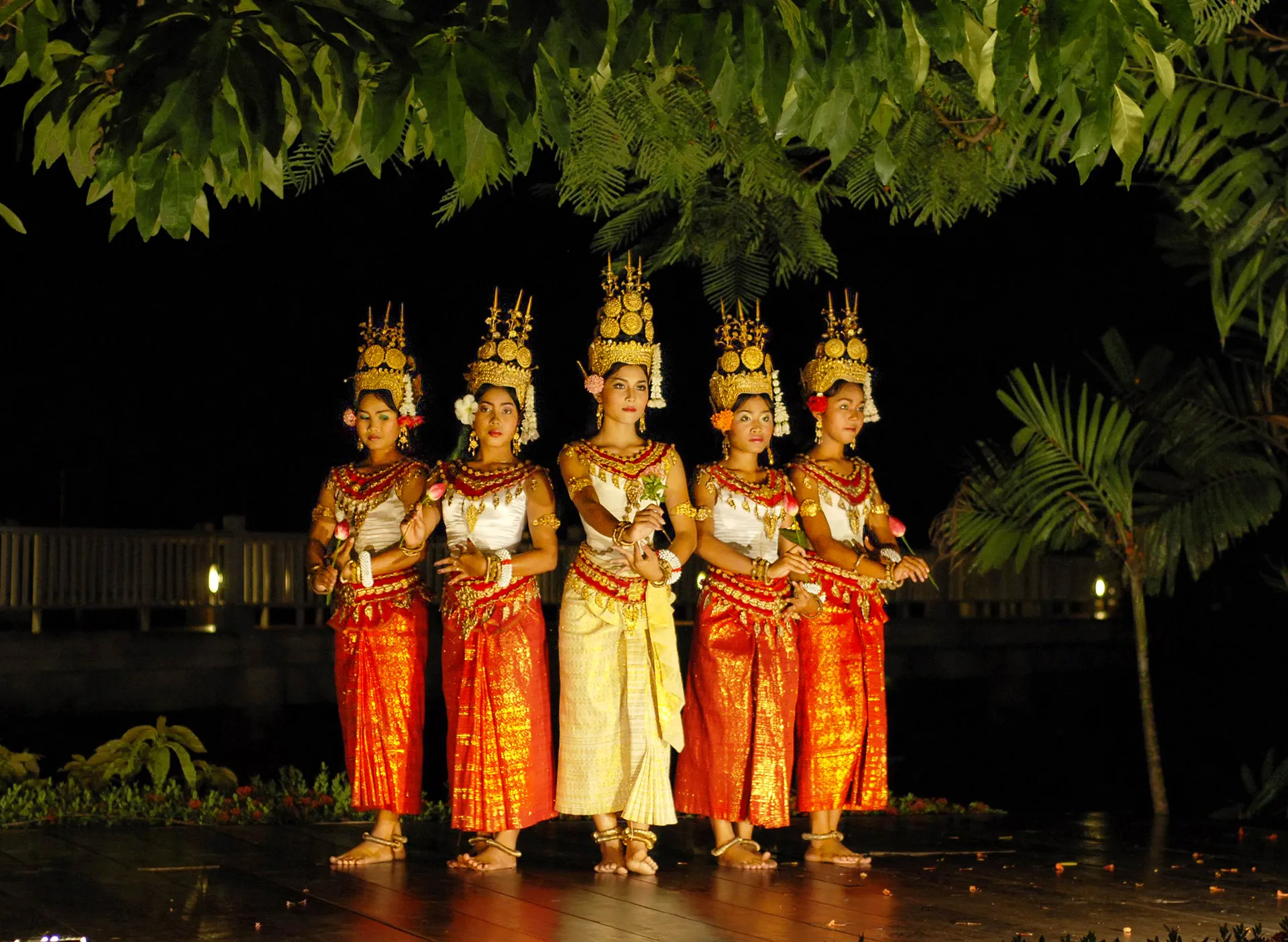
Beyond the temples, Tonlé Sap Lake — Southeast Asia's largest freshwater lake — lies twenty minutes south. Its floating villages, where houses, schools, and markets bob on the water, offer a glimpse into a way of life unique to this region. The Cambodian countryside, with its rice paddies, sugar-palm trees, and ox-cart trails, is best explored by bicycle. The Phare Cambodian Circus, a social enterprise featuring acrobatic shows inspired by Khmer folklore, is the town's most acclaimed evening entertainment.
Siem Reap is a key destination on Mekong and Tonlé Sap river cruise itineraries, welcoming AmaWaterways, APT Cruising, Avalon Waterways, CroisiEurope, Emerald Cruises, P&O Cruises, Scenic River Cruises, Tauck, Uniworld River Cruises, and Viking. Most Mekong cruises include overland transfers to and from Siem Reap for multi-day temple exploration. November through March, the cool dry season, offers the most comfortable conditions for exploring Angkor, though the green season from June to October rewards with fewer crowds and lush jungle scenery.