Easter Island — Rapa Nui in the language of its Polynesian inhabitants — is the most remote inhabited island on earth, lying 2,300 miles west of the Chilean coast and 1,300 miles from the nearest populated land, Pitcairn Island. When Dutch explorer Jacob Roggeveen became the first European to sight its shores on Easter Sunday 1722, he encountered a civilisation that had erected nearly nine hundred monumental stone statues, the moai, across a windswept volcanic landscape no larger than the city of San Francisco.
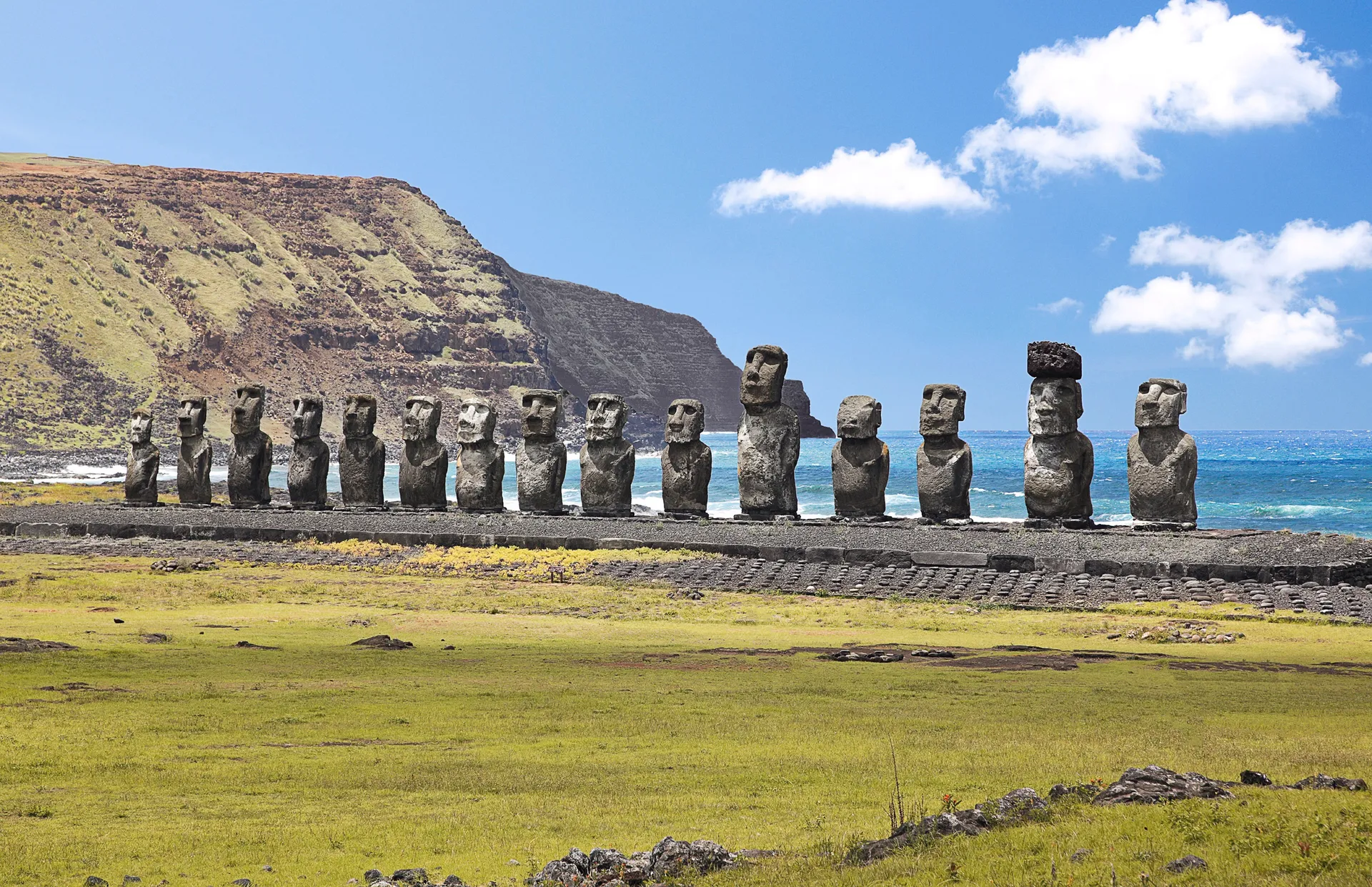
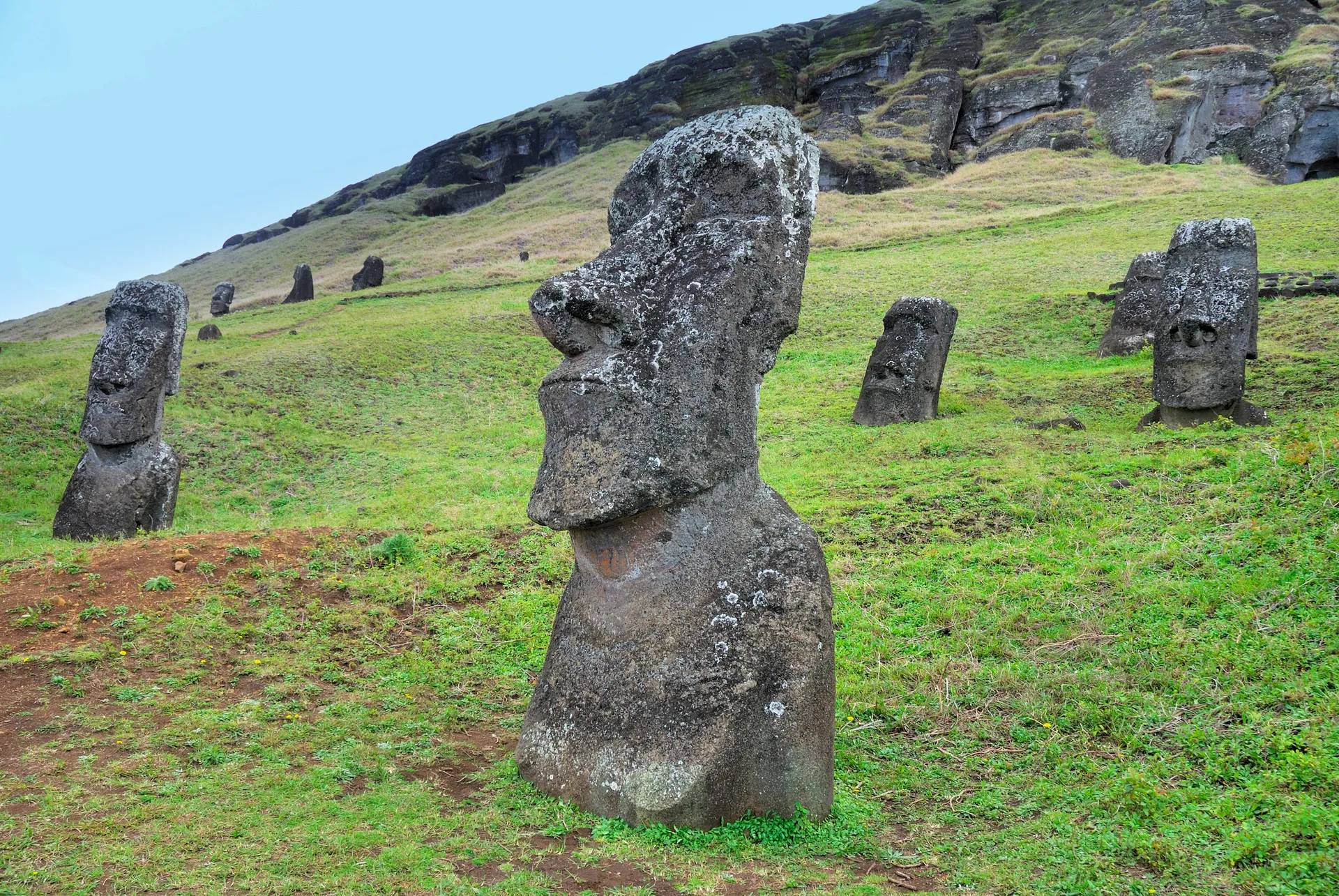
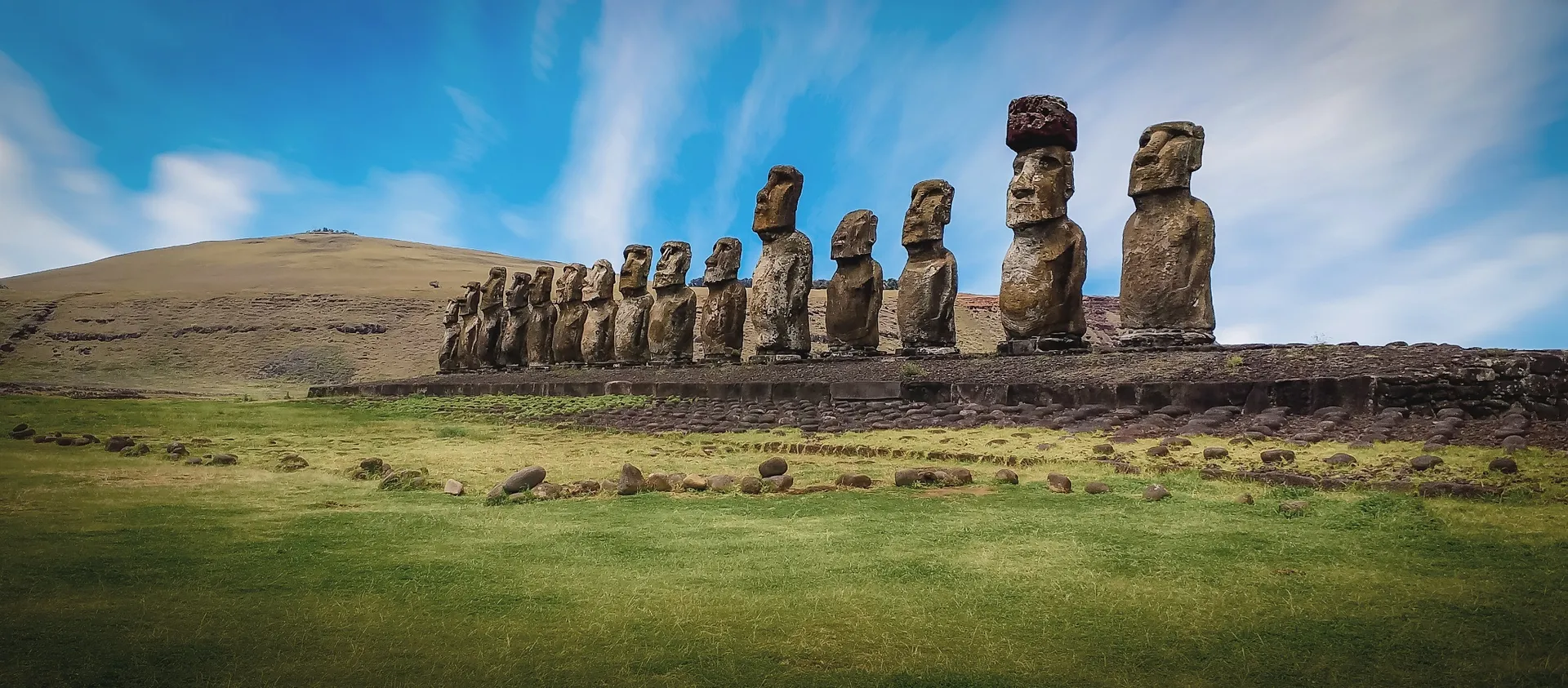
The mystery and grandeur of the moai define every visit to Rapa Nui. Carved from the compressed volcanic ash of the Rano Raraku quarry between roughly 1250 and 1500 AD, these figures — some standing over thirty feet tall and weighing eighty tonnes — were transported across the island and erected on ceremonial platforms called ahu. Ahu Tongariki, with fifteen restored moai silhouetted against the Pacific sunrise, is the most photographed site on the island. The quarry itself, where nearly four hundred unfinished statues remain embedded in the hillside, offers an eerie glimpse into a civilisation that suddenly ceased its monumental project.
Rapa Nui's cuisine reflects both its Polynesian heritage and its Chilean sovereignty. Fresh tuna, caught daily by local fishermen, appears as ceviche, sashimi, and grilled steaks at restaurants in the sole town of Hanga Roa. Umu — an earth oven feast in which fish, sweet potatoes, and taro are wrapped in banana leaves and slow-cooked over hot stones — is the island's most traditional culinary experience. Empanadas de atún, a local twist on the Chilean classic, are the quintessential street food.
Beyond the moai, the island's natural landscapes reward exploration. The crater lake of Rano Kau, a collapsed volcanic caldera at the island's southwestern tip, harbours a microclimate of endemic plants. The ceremonial village of Orongo, perched on the crater rim, was the site of the annual birdman competition, a dramatic ritual that determined the island's spiritual leader. Ana Kai Tangata, a sea cave decorated with ancient bird paintings, is a short walk from Hanga Roa.
Easter Island's extreme remoteness makes it one of the most exclusive cruise calls in the Pacific, visited by Azamara, Hapag-Lloyd Cruises, Holland America Line, MSC Cruises, P&O Cruises, Princess Cruises, Seabourn, and Silversea. Ships typically anchor offshore with passengers tendering to Hanga Roa. The island can also be reached by direct flights from Santiago. December through March offers the warmest weather, but the island's subtropical climate makes it visitable year-round.